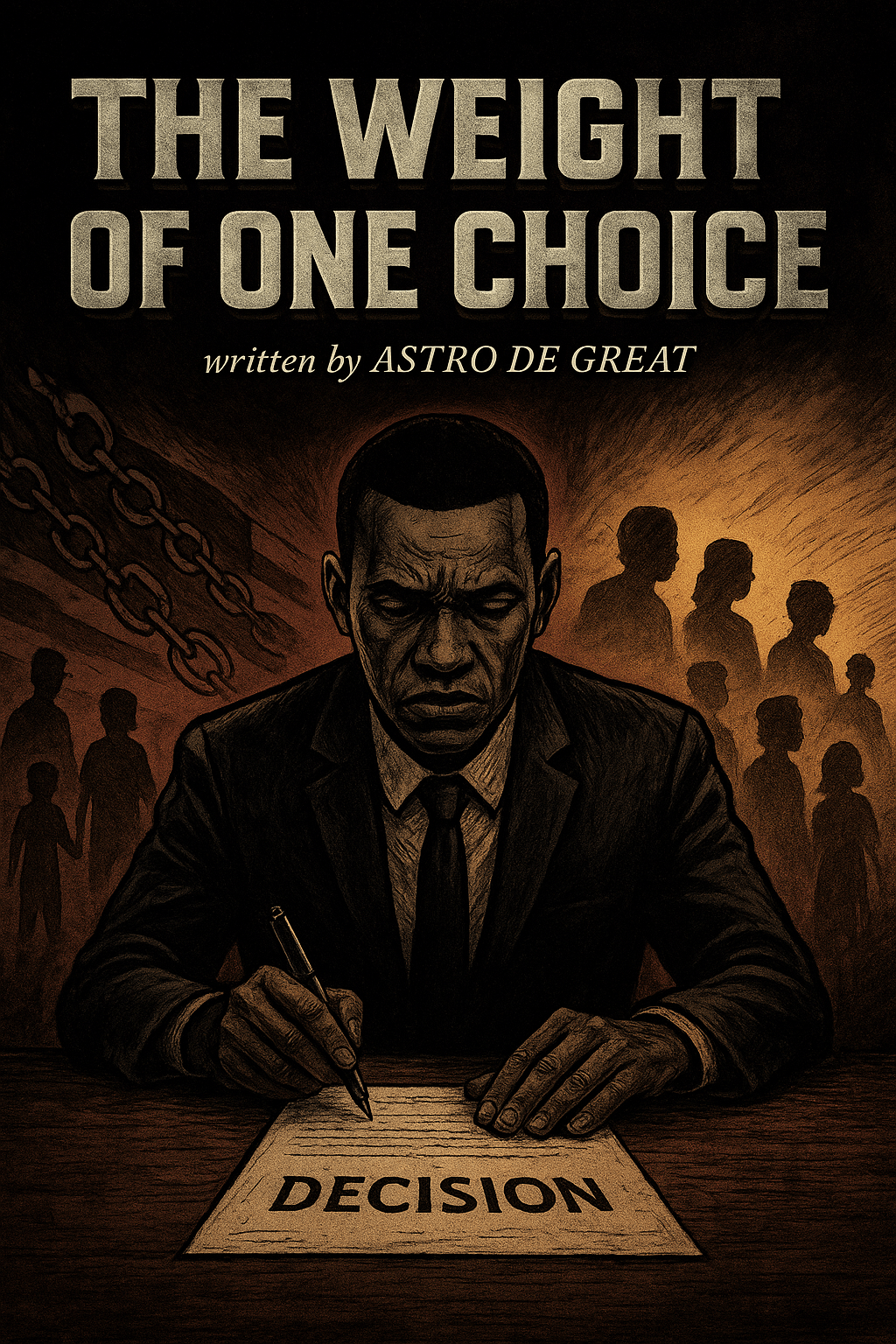
Written by ASTRO DE GREAT

The night was unusually quiet in the capital city. Streetlights hummed faintly, and the wind carried the scent of rain yet to fall. Somewhere, in a heavily guarded room, a single man sat at a table. His name was Chike Obi, the newly elected leader of the nation.
On his desk lay a folder stamped “CLASSIFIED”. Inside it were documents, warnings, and intelligence reports. At the center of it all was one pressing decision: whether to sign an agreement that could bring foreign aid to the country or sign away the nation’s sovereignty for decades.
Chike wasn’t alone in the room, but he felt like he was. Advisors whispered. Some urged him to sign “It will bring jobs, wealth, infrastructure.” Others cautioned him “This is a trap, sir. The people will pay the price long after you’re gone.”
And then, silence. Everyone looked at him.
The Invisible Chain
Across the country, millions of citizens slept soundly, unaware that the fate of their children and grandchildren rested on Chike’s pen. Mothers prepared breakfast the next morning, students hurried to school, farmers tilled the soil all while one man wrestled with the power to alter their destiny.
What he did not decide for himself, he decided for everyone.
This is how nations sometimes fall, not through war, but through one handshake, one signature, one selfish or careless decision.
The Human Cost
Chike remembered his father’s words:
“The decisions of leaders are not written on paper; they are written on the faces of the people. If you ever lead, look into the eyes of a hungry child before you decide.”
He saw that child in his mind the boy in the rural village who walked barefoot to school, the girl who fetched water from a stream miles away, the mother who prayed for medicine she couldn’t afford.
If he signed, maybe roads and railways would come. But would that child’s freedom be chained to foreign debt? Would tomorrow’s generation curse his name?
The Weight of Life’s Truth
Life works in patterns: one person’s decision often echoes far beyond themselves.
- A father’s choice to abandon or stay changes the story of a family.
- A teacher’s choice to care or neglect shapes a child’s future.
- A leader’s choice to serve or exploit can lift or destroy a nation.
Chike realized something deeper power was not in the papers before him. Power was in choice, and every choice carried invisible passengers: consequences.
The Decision
Morning came. Cameras flashed as he walked out to announce his decision. The world waited, allies and enemies alike. His people leaned closer to radios and televisions, their hopes bundled in his words.
Chike spoke slowly, with trembling hands but a steady heart:
“I was given power not to sell my country but to serve her. We will not take aid that makes us slaves. We will build with our own sweat, and though the road is harder, it is ours.”
Some cheered, some cursed him. But for the first time in years, the nation felt the rare weight of dignity.
The Lesson
Your country, your community even your family can sometimes hang on a single decision by one person. That is the frightening yet sacred truth of life.
We do not live in isolation. Every choice small or great ripples into the lives of others. Leaders make decisions for millions. Parents make decisions for generations. And even ordinary people, in moments they do not expect, carry the fate of others in their hands.
The story of Chike Obi reminds us:
- Responsibility is heavy because life is interconnected.
- One decision can destroy, but one decision can also redeem.
- To live wisely is to decide with tomorrow in mind, not just today.
And so, when next you choose whether as a parent, friend, leader, or citizen remember: it may look like your decision, but in reality, it might be the destiny of many.
 Astro
Astro 