The ongoing conflict involving Israel and a growing coalition of hostile nations has raised a crucial question among Bible scholars, theologians, and ordinary believers alike: Are we witnessing the fulfillment of Ezekiel 38–39?
These two remarkable chapters in the Old Testament present a vivid, prophetic account of a future invasion of Israel by a massive alliance of nations, led by a mysterious figure called Gog from the land of Magog. The prophecy climaxes with God’s dramatic and supernatural intervention to defend Israel, bringing global recognition to His name.
In this article, we will explore what Ezekiel 38–39 foretells, examine how it compares to the present-day wars facing Israel, and consider whether current events might be setting the stage for these ancient prophecies to unfold.
Ezekiel 38–39: The Prophetic Vision
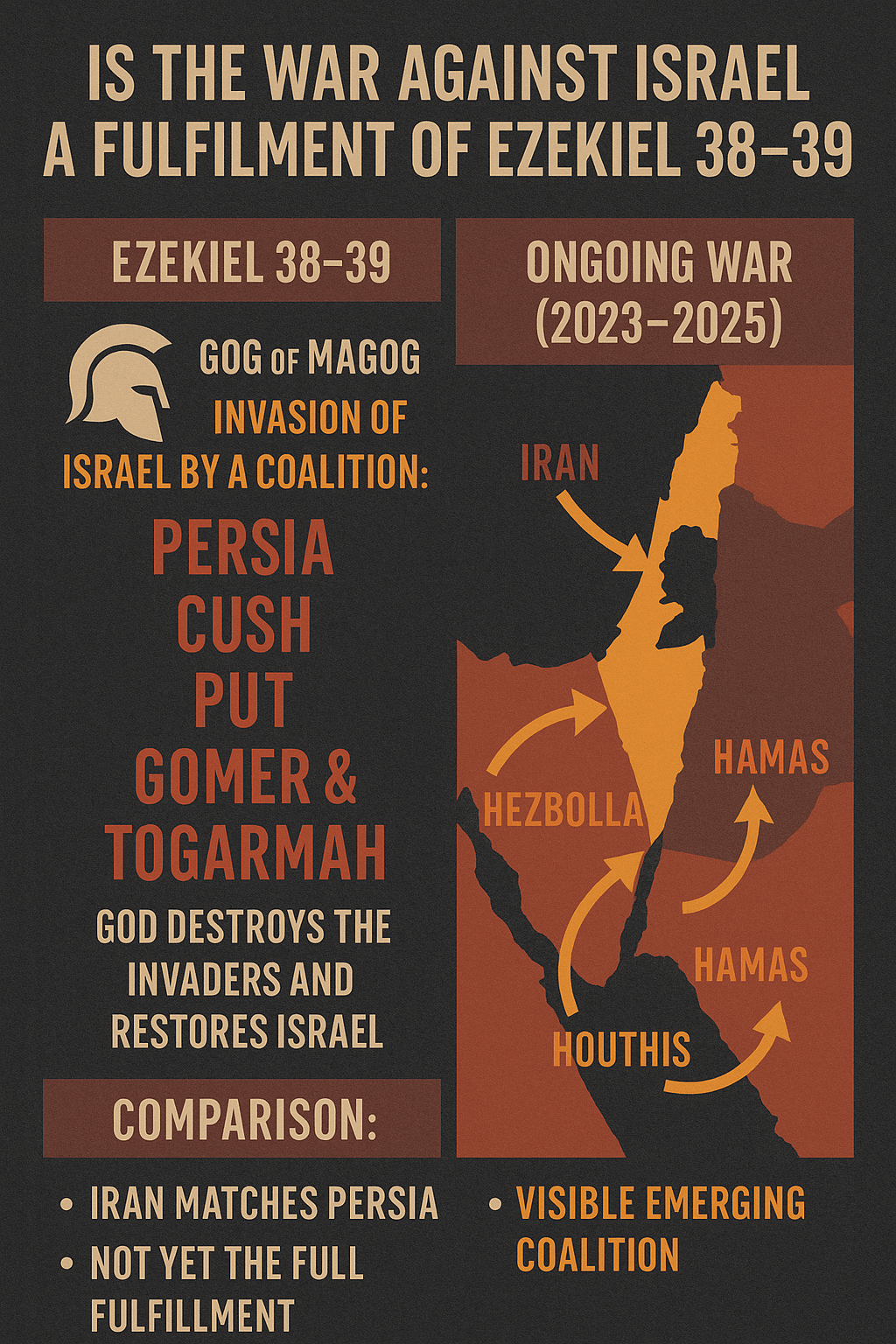
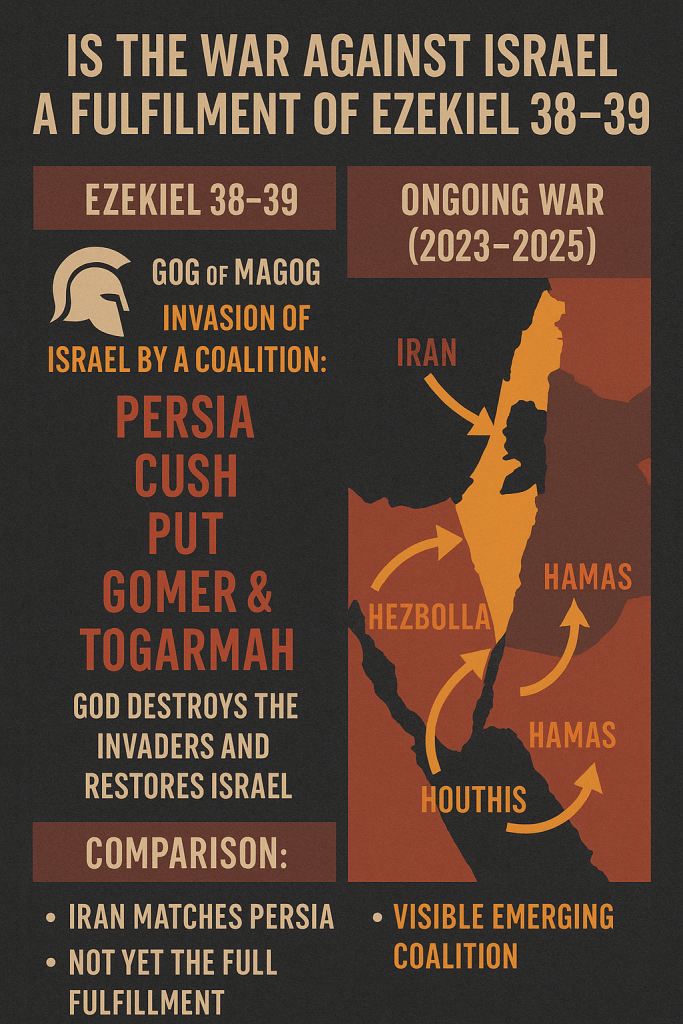
Ezekiel’s prophecy describes an unprecedented war in which a coalition of nations, led by Gog of the land of Magog, invades Israel in what appears to be a time of peace and security. These chapters list Gog’s allies as:
- Persia (modern-day Iran)
- Cush (Sudan/Ethiopia region)
- Put (Libya/North Africa)
- Gomer and Togarmah (regions near Turkey and the Caucasus)
Despite the overwhelming force, God Himself intervenes. With earthquakes, hailstones, fire, and confusion, He annihilates the invaders on the mountains of Israel. The aftermath involves months of burying the dead and burning weapons—followed by Israel’s spiritual restoration and the nations acknowledging the sovereignty of the God of Israel.
Modern Israel’s Conflicts: 2023–2025
Israel is currently embroiled in multi-front warfare, most notably with:
- Hamas in the Gaza Strip
- Hezbollah in Lebanon and Syria
- Iran (Persia), which funds and coordinates proxy groups
- Houthi rebels in Yemen attacking Israeli-linked targets
- Rising tensions with Turkey, and cooling ties with Russia
These conflicts are not isolated. They reflect a growing coalition of nations and movements that share a common goal: the weakening or elimination of Israel as a state.
Noteworthy Parallels:
- Iran (Persia) is a lead instigator, just as named in Ezekiel 38.
- The coalition forms from multiple directions: North (Hezbollah), South (Hamas/Yemen), and East (Iran).
- Israel appears increasingly isolated, relying mostly on its own defenses.
Key Comparisons: Prophecy vs. Reality
Prophetic Element (Ezekiel 38–39) Current Reality (2023–2025) Gog leads a vast coalition No single leader yet, but Iran plays a central role Nations involved: Persia, Cush, Put, Gomer, Togarmah Involvement from Iran, proxies in Africa, Middle East, Turkey Attack on peaceful Israel Israel is on high alert and under regular attack God intervenes supernaturally Israel responds with advanced tech, Iron Dome, no divine disasters yet Total defeat of enemies Enemies wounded but not fully destroyed Spiritual revival in Israel Israel remains largely secular, no national turning to God yet
Theological Perspectives
✝️ Christian Premillennial View:
- Ezekiel 38–39 is future and may occur before or during the Great Tribulation.
- Today’s wars are foreshadows or setup events for that future war.
- The involvement of Iran (Persia) is seen as a major prophetic sign.
🕊️ Symbolic View:
- Some theologians see the prophecy as a spiritual drama, not literal warfare.
- It may symbolize God’s ongoing defense of His people throughout history.
- Others argue the prophecy was fulfilled in ancient times or during past invasions.
Caution Against Over-Interpretation
While the similarities are intriguing, there are important differences that caution against declaring today’s conflict as the definitive fulfillment of Ezekiel’s prophecy:
- No single “Gog” figure has emerged as the coalition’s leader.
- Israel is not living in peace as Ezekiel 38:11 describes.
- The war has not ended with God’s supernatural acts like earthquakes or fire from heaven.
- There has been no global acknowledgment of God or spiritual awakening in Israel.
These facts suggest that while the patterns of Ezekiel’s prophecy may be forming, the complete fulfillment is still ahead.
Conclusion: Prophetic Prelude or Fulfillment?
The war against Israel today may not be the literal fulfillment of Ezekiel 38–39, but it likely represents a prophetic prelude—a shadow, a rehearsal, or the beginning of alignments foretold in Scripture.
With Iran’s growing aggression, global shifts in political alliances, and Israel’s increasing isolation, the pieces of the Ezekiel prophecy are beginning to resemble today’s headlines more than ever before.
As always, the wise believer should:
- Stay rooted in Scripture
- Remain watchful, but not fearful
- Seek God’s purpose in times of shaking
“When these things begin to take place, stand up and lift up your heads, because your redemption is drawing near.” – Luke 21:28
Like and share do well to subscribe for future content.
 Astro
Astro 