
A Metaphorical Perspective on Human Nature and Dependency
In exploring the intricacies of human relationships, especially those concerning gender dynamics and roles, metaphors often serve as powerful tools for deeper understanding. One such metaphor is the provocative phrase: “The principle of a woman is a principle of stomach.” At first glance, this statement may appear reductionist or even controversial, but when unpacked carefully, it opens a window into a nuanced discussion about survival, sustenance, and the emotional economy of relationships.
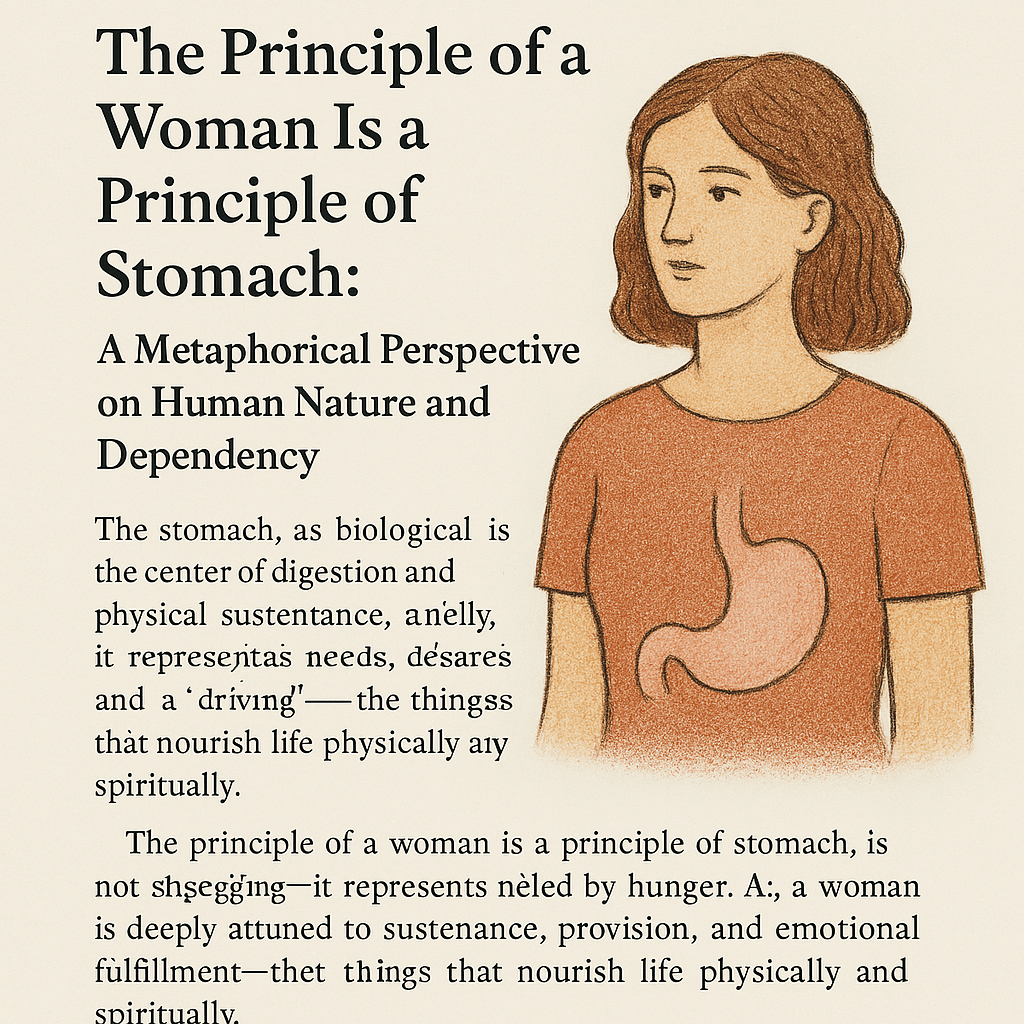
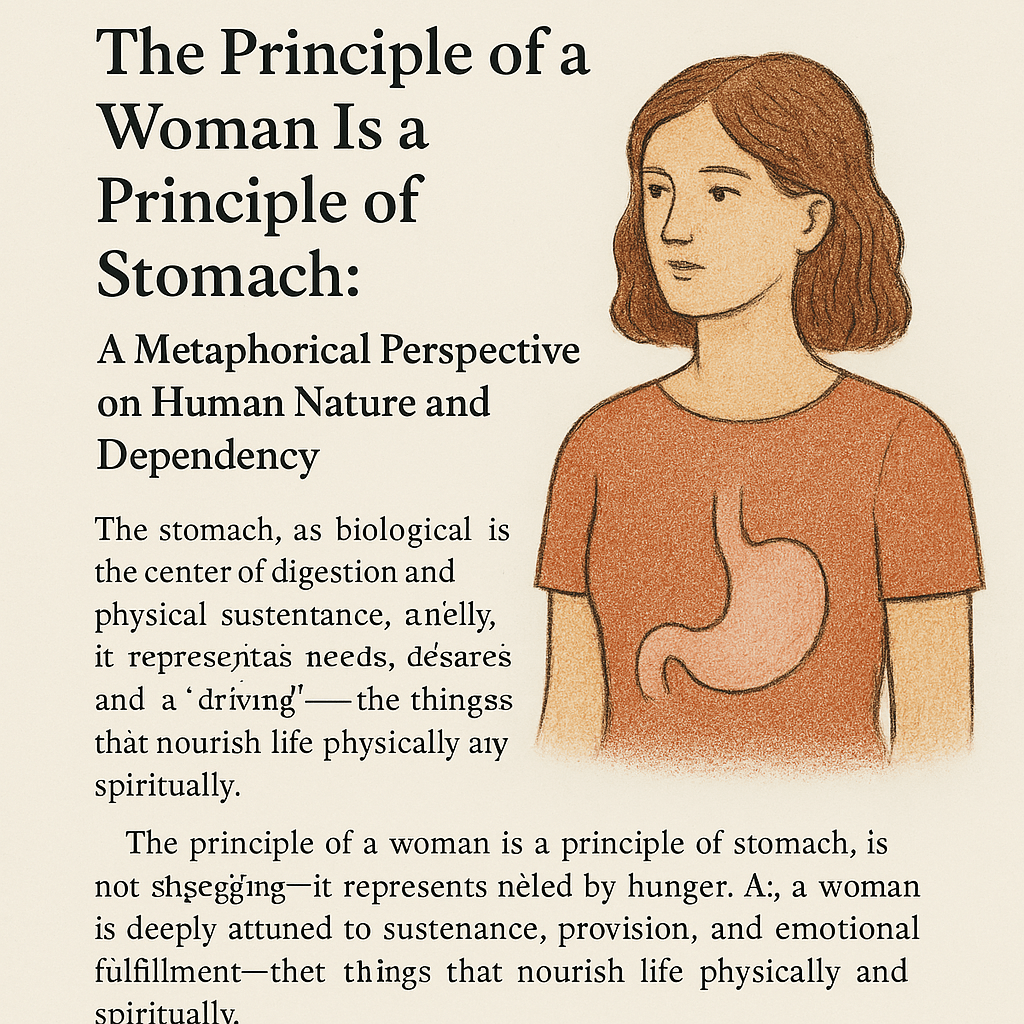
The stomach, biologically, is the center of digestion and physical sustenance. Symbolically, it represents needs, desires, and the driving force behind human actions. When we say “the principle of a woman is a principle of stomach,” it doesn’t necessarily mean women are ruled by hunger in a literal sense. Rather, it suggests that, like the stomach, a woman is deeply attuned to sustenance, provision, and emotional fulfillment—the things that nourish life physically and spiritually.
In many cultures, especially traditional ones, women have historically been seen as nurturers and home-makers. This role often ties them directly to the need for security, which includes food, shelter, and emotional stability. Thus, many of a woman’s decisions—especially in the context of relationships and family—are influenced by her need for provision and consistency. Just like the stomach is sensitive to what it receives, so too is a woman attuned to the quality of the support and care she receives.
This principle also reflects the responsiveness of a woman. Just as the stomach reacts to both good and bad inputs, a woman responds to the conditions around her—love, neglect, care, or abuse. Her environment has a profound impact on her behavior, just as food has an effect on the stomach.
Beyond physical provision, the “principle of stomach” can also be seen in the emotional realm. A woman thrives when emotionally nourished. Words of affirmation, acts of service, and love are like meals to her soul. When deprived of these, just as the stomach starves and sends signals of discomfort, a woman may express emotional hunger through discontent, withdrawal, or dissatisfaction.
However, this metaphor should not be misunderstood to suggest that women are inherently materialistic or dependent. Instead, it points to the natural human desire for sustenance, which is not limited to women. Men also have stomachs, both literal and metaphorical, but the societal expectation often paints women as more expressive about their needs. This visibility is not a flaw; it is a reflection of their intuitive connection to life’s nurturing principle.
If a woman is the stomach, one could argue that a man is the hand—the provider, the laborer, the giver. In a healthy relationship, the hand feeds the stomach, and the stomach gives strength to the hand. There is no superiority here—only interdependence. When either fails, the whole body suffers.
The principle of a woman as a “principle of stomach” is not about belittlement but about acknowledging the central role of nourishment—physical, emotional, spiritual—in her life and identity. It’s a reminder that to understand women (and indeed all human beings), one must understand their hunger—not just for food, but for love, attention, respect, and care. When these are provided, life flourishes. When they are withheld, discontent brews.
So, if you seek to understand a woman, listen to what she craves—not just on her plate, but in her soul.
 Astro
Astro 