
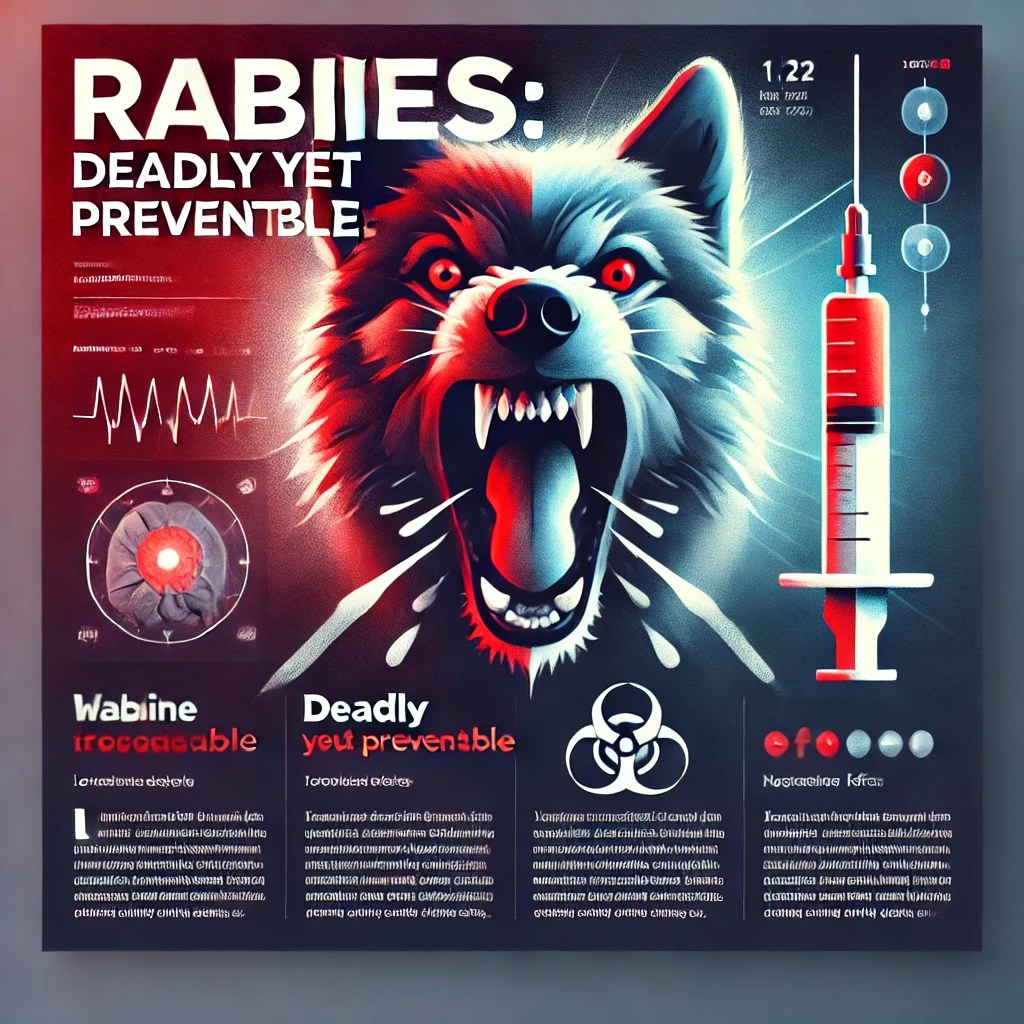
Rabies is one of the most feared viral diseases in the world due to its near 100% fatality rate once symptoms appear. It is a zoonotic disease, meaning it can be transmitted between animals and humans, primarily through the saliva of infected animals. Despite being preventable, rabies remains a significant public health issue, particularly in regions with limited access to vaccines and medical care.
What is Rabies?
Rabies is caused by the Rabies lyssavirus, a virus that affects the central nervous system (CNS) of mammals. Once contracted, the virus spreads through the body to the brain, causing severe inflammation and, eventually, death.
How is Rabies Transmitted?
Rabies is typically transmitted through:
1. Animal Bites: The most common route, especially from rabid dogs, bats, raccoons, or foxes.
2. Scratches or Open Wounds: If contaminated with saliva from an infected animal.
3. Mucous Membranes: Rarely, the virus can enter through the eyes, nose, or mouth if exposed to infected saliva.
Symptoms of Rabies
Rabies symptoms can take weeks or even months to appear after exposure, depending on the bite location and the viral load. The disease progresses in two stages:
1. Prodromal Stage
- Fever
- Headache
- Fatigue or weakness
- Pain or tingling at the bite site
2. Acute Neurological Stage
Furious Rabies: Characterized by aggression, hallucinations, hydrophobia (fear of water), excessive salivation, and seizures.
Paralytic Rabies: Causes muscle paralysis, leading to coma and eventual death.
Effects of Rabies on Humans
Once symptoms appear, rabies is almost always fatal. The virus causes:
Brain Inflammation: Resulting in confusion, agitation, and eventually irreversible damage.
Paralysis: Gradual loss of motor functions and respiratory failure.
Death: Usually occurs within days of the onset of severe symptoms.
Effects of Rabies on Animals
Infected animals show erratic behavior, which can be categorized as:
Furious Rabies: Aggressive behavior, excessive drooling, and attacking without provocation.
Dumb Rabies: Lethargy, paralysis, and unusual tameness in wild animals.
How to Prevent Rabies
1. Vaccination
Humans: Pre-exposure vaccines are recommended for high-risk individuals such as veterinarians and travelers to rabies-endemic areas.
Pets: Routine rabies vaccinations for dogs, cats, and other domestic animals are essential.
2. Avoiding Risky Situations
Do not approach wild or stray animals.
Avoid handling dead or sick animals without proper protection.
3. Post-Exposure Prophylaxis (PEP)
If bitten or scratched by an animal suspected of having rabies:
Wash the wound immediately with soap and water for at least 15 minutes.
Seek medical care to receive rabies immunoglobulin and a series of rabies vaccines.
Global Impact of Rabies
High-Risk Regions: Rabies is most prevalent in Asia and Africa, with dogs accounting for over 99% of human cases.
Human Deaths: Rabies causes approximately 59,000 deaths annually, most of which are preventable with timely intervention.
Eradication Efforts: Vaccination programs for animals and better healthcare access for humans have significantly reduced cases in some parts of the world.
Conclusion
Rabies is a deadly yet entirely preventable disease. By ensuring proper animal vaccinations, avoiding risky animal interactions, and seeking immediate medical attention after potential exposure, individuals can protect themselves and their communities. Efforts to educate the public and eliminate rabies in domestic animals are critical to achieving a rabies-free future.
 Astro
Astro 