
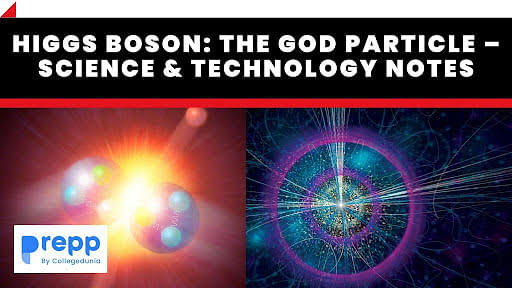
The Higgs boson, often referred to as the “God particle,” is a fundamental particle in physics that plays a crucial role in our understanding of the universe. Its discovery was a monumental achievement in the field of particle physics, but the nickname “God particle” has sparked much debate and misunderstanding, even among scientists. Here is an extensive explanation of why the Higgs boson is called the “God particle,” including its significance, the origins of the nickname, and the broader implications of its discovery.
1. Understanding the Higgs Boson: What is It?
The Higgs boson is an elementary particle in the Standard Model of particle physics, which is the framework that describes the fundamental particles and forces that make up the universe. It is named after physicist Peter Higgs, who, along with others, proposed its existence in the 1960s. The Higgs boson is associated with the Higgs field, an invisible field that permeates all of space. The interaction of particles with this field gives them mass, which is a property that defines how much matter an object has.
Without the Higgs field, particles would move at the speed of light and would not form atoms, molecules, or anything resembling the complex structures we see in the universe today, including stars, planets, and life itself. In essence, the Higgs boson plays a fundamental role in shaping the universe by enabling particles to acquire mass.

2. The Significance of the Higgs Boson
The significance of the Higgs boson lies in its role in the mechanism that gives mass to other particles. According to the Standard Model, the Higgs field interacts differently with different particles, giving them varying masses. Some particles, like photons (the particles of light), do not interact with the Higgs field at all and remain massless, while others, like electrons and quarks, interact strongly and thus have mass.
The discovery of the Higgs boson was essential because it confirmed a key aspect of the Standard Model that had long been hypothesized but never observed. The existence of the Higgs boson was finally confirmed in 2012 when experiments conducted at the Large Hadron Collider (LHC) at CERN (the European Organization for Nuclear Research) detected it. This discovery was celebrated worldwide as it provided direct evidence of the Higgs field, solidifying our understanding of how the universe works at the most fundamental level.
3. Origins of the Nickname “God Particle”
The term “God particle” was popularized by physicist Leon Lederman, a Nobel laureate and former director of Fermilab, in his 1993 book titled The God Particle: If the Universe Is the Answer, What Is the Question? The nickname was intended to highlight the Higgs boson’s profound importance in understanding the universe, but it was not initially meant to have religious connotations.
Lederman actually wanted to call it the “Goddamn Particle” because of the frustration physicists experienced in trying to detect it, given how elusive it was for decades. However, his publisher suggested the more marketable and less controversial “God particle.” This name stuck in the popular imagination and has since been widely used in media and discussions about the Higgs boson, though it has often led to misconceptions.
4. Misconceptions About the “God Particle”
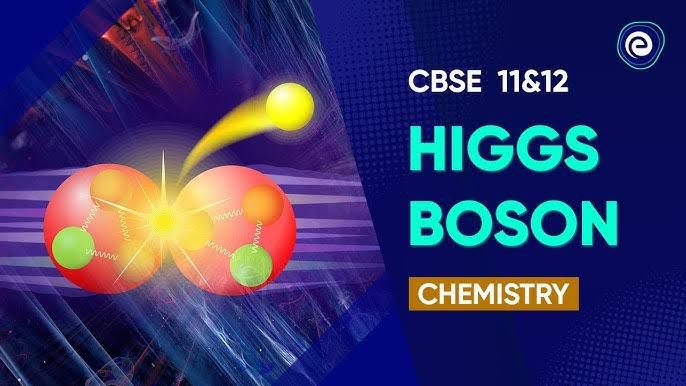
The term “God particle” can be misleading because it suggests that the Higgs boson has a divine or supernatural aspect, which is not the case. The nickname was not meant to imply that the Higgs boson is connected to God or that it plays a role in creation from a theological perspective. Instead, the Higgs boson is purely a scientific concept that helps explain why particles have mass.
Many physicists, including Peter Higgs himself, have expressed discomfort with the term because it oversimplifies the particle’s role and can lead to misunderstandings about the nature of scientific research. The Higgs boson is not about proving or disproving the existence of God; it is about understanding the fundamental workings of the universe through the lens of physics.
5. The Impact of the Higgs Boson Discovery
The discovery of the Higgs boson was a landmark event in physics, confirming the Standard Model’s predictions and enhancing our understanding of the universe’s origins. Here are some key impacts of this discovery:
- Confirmation of the Standard Model: The detection of the Higgs boson was one of the last missing pieces of the Standard Model, confirming that our theoretical framework for particle physics is accurate and reliable.
- Advancing Particle Physics: The discovery has opened new avenues of research in particle physics, including probing deeper into the nature of mass, the behavior of the Higgs field, and the possibility of discovering new particles beyond the Standard Model.
- Technological Advances: The research and technological innovations required to discover the Higgs boson, such as the construction of the LHC, have pushed the boundaries of engineering, computing, and data analysis, with applications that extend beyond physics.
- Public Engagement with Science: The discovery brought particle physics into the public eye, sparking widespread interest and excitement about science. The nickname “God particle,” despite its controversies, played a role in making this complex topic more accessible to the general public.
6. Why the Higgs Boson Matters Beyond Physics
The Higgs boson’s discovery represents humanity’s quest to understand the fundamental laws governing the universe. It is a testament to our ability to explore, experiment, and unravel the mysteries of existence. The discovery also highlights the collaborative nature of modern science, with thousands of scientists, engineers, and researchers from around the world contributing to this monumental achievement.
While the Higgs boson may not be divine, it embodies the awe-inspiring complexity and beauty of the universe, serving as a reminder of how much there is yet to learn. Its nickname, “God particle,” may be contentious, but it underscores the particle’s monumental importance in physics and our understanding of the cosmos.
Conclusion
The Higgs boson is called the “God particle” not because it has any religious significance but because of its fundamental role in the universe’s architecture, as proposed by physicists. The nickname, popularized by Leon Lederman, was intended to capture the particle’s importance and the challenges faced in discovering it. Despite the misconceptions that the term can evoke, the Higgs boson remains one of the most crucial discoveries in modern physics, providing insight into why matter has mass and confirming key aspects of our understanding of the universe. Its discovery at the LHC marked a new era in particle physics, continuing to inspire and challenge scientists in the ongoing exploration of the fundamental nature of reality.
 Astro
Astro 