
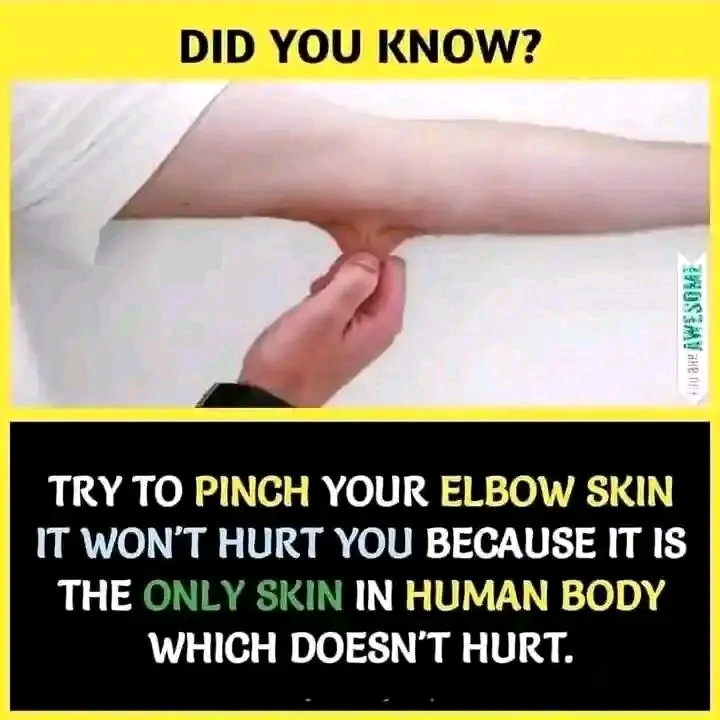
The Fascinating Truth About Elbow Skin: Why It Doesn’t Hurt When You Pinch It
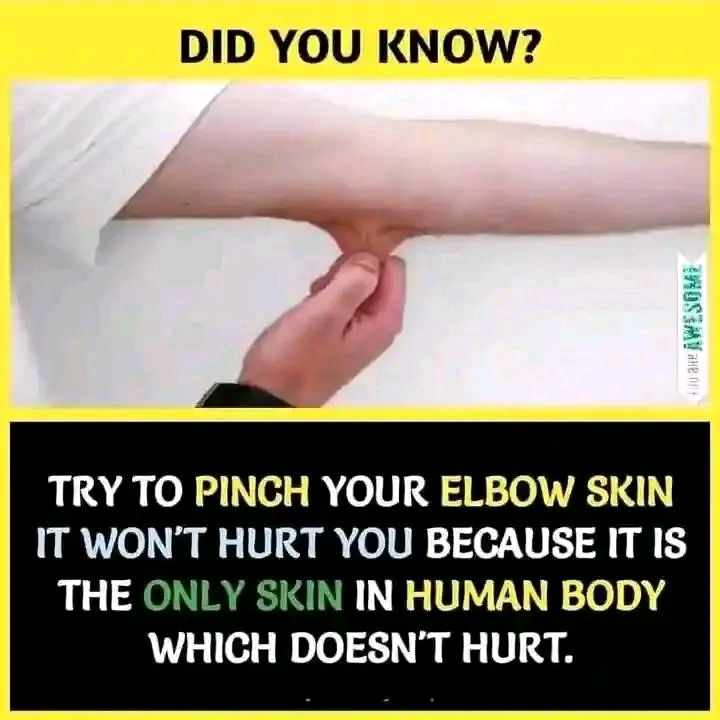
Have you ever tried pinching the skin on your elbow? If you haven’t, go ahead and try it now. You’ll notice something interesting: it doesn’t hurt! This might seem odd considering how sensitive our skin is in most areas of our body. But the skin on your elbow, scientifically known as the olecranon skin, is unique. Let’s delve into the reasons why pinching your elbow skin doesn’t hurt and explore what makes it different from the rest of your body.
What Makes Elbow Skin Different?
- Less Sensitive Nerve Endings:
The primary reason elbow skin doesn’t hurt when pinched is that it has fewer nerve endings compared to other parts of the body. Nerve endings are responsible for detecting sensations like pain, temperature, and pressure. Since there are fewer nerve endings in your elbow, it’s less sensitive to pain. - Loose Skin:
The skin on your elbow is also looser and more flexible, which allows it to stretch easily when pinched. This elasticity is crucial because your elbow joint needs to move freely. The looseness and elasticity reduce the tension on the skin, making it harder to create the pressure needed to trigger pain. - Thicker Epidermis:
The outer layer of the elbow skin, called the epidermis, is generally thicker and tougher than in other parts of the body. This thicker skin acts as a natural barrier, protecting the underlying tissues and nerves from minor injuries and reducing sensitivity. - Functionality:
Your elbow is one of the most used joints in the body, bending and straightening hundreds of times a day. The skin over the elbow has adapted to withstand constant movement and friction without being damaged easily. This adaptation also means it’s less sensitive to pain.
Is It Really the Only Painless Skin?
While the skin on your elbow is uniquely resistant to pain from pinching, it’s not the only area where pain is minimal. The skin over the knees and certain parts of the back can also be less sensitive due to similar reasons like fewer nerve endings and thicker, more resilient skin. However, the elbow skin is particularly notable for its combination of loose, thick, and less sensitive properties.
The Takeaway
The skin on your elbow is an excellent example of how the human body adapts to the demands placed on it. Its unique structure allows us to move our arms freely without worrying about damaging the skin or feeling pain with every movement. While it might be a fun party trick to show your friends, it also serves as a reminder of the complexity and ingenuity of our bodies.
So next time someone asks you to pinch your elbow skin, you can share with them the fascinating reasons why it doesn’t hurt and impress them with your knowledge!
 Astro
Astro 