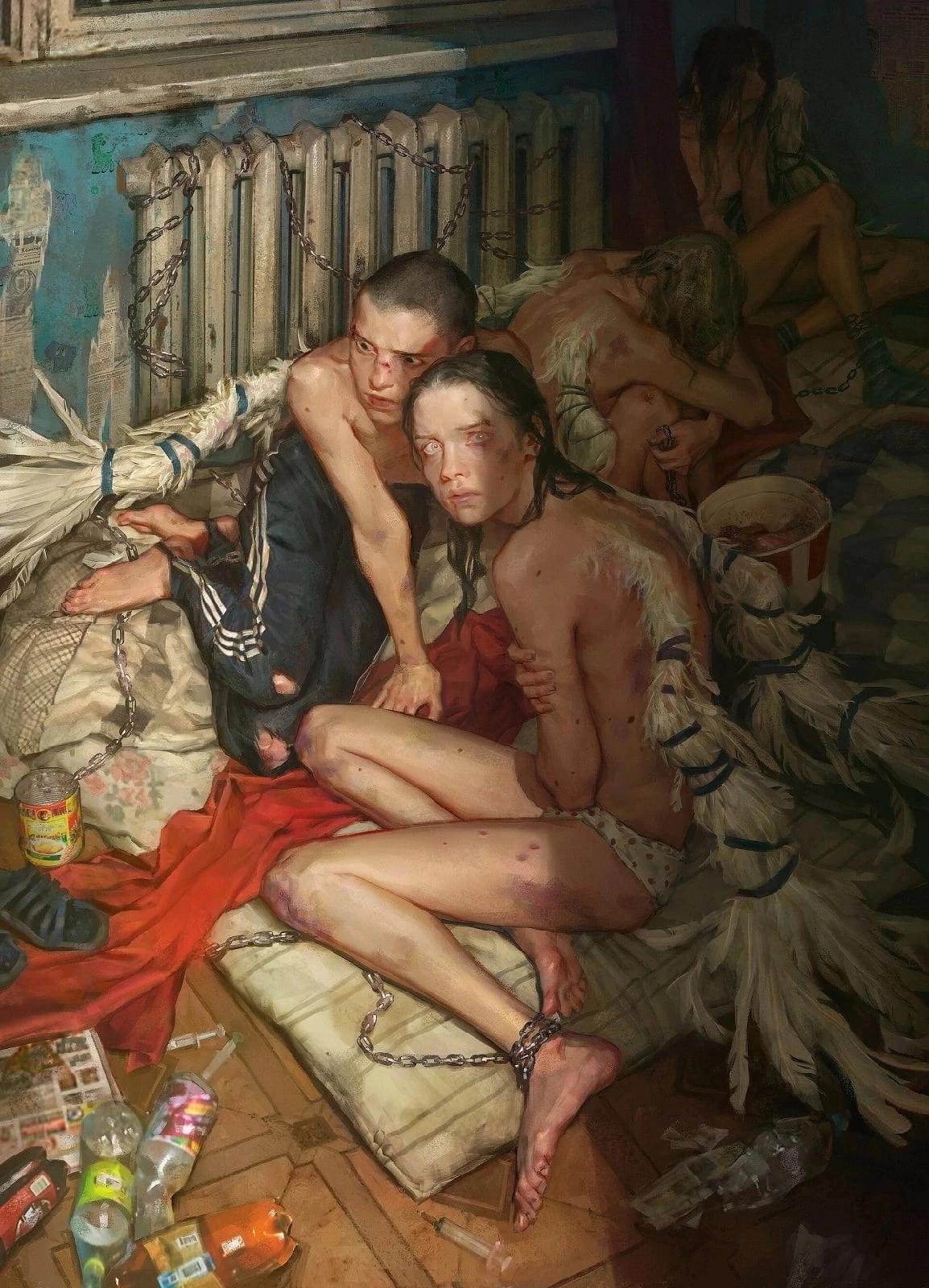
In 2016, Litvinova Julia painted a hauntingly evocative portrait titled “Fallen Angels with Bound Wings.” This artwork delves into the harrowing realities faced by children from dysfunctional families, capturing the essence of lives shackled by circumstances beyond their control. These children, born into a world of filth and vice, find their wings bound from birth, trapped in a vicious cycle that seemingly offers no escape or future.
The term “fallen angels” powerfully encapsulates their plight. Once potential beings of light and hope, their wings are now bound, symbolizing the loss of freedom and potential. From the moment they enter this world, they are entangled in the chains of their environment, an environment rife with neglect, abuse, and vice. The homes they grow up in are not sanctuaries of love and security, but rather prisons of despair and degradation.
In such households, the normalcy of childhood is replaced with unimaginable horrors. Beatings are not uncommon; some children are even chained to radiators, treated more like burdens than beings deserving of care and compassion. The physical scars they bear are a mere reflection of the deeper psychological wounds inflicted upon them. They grow up in environments devoid of joy, their spirits battered by constant neglect and abuse. For them, childhood is not a time of discovery and growth, but a nightmare from which there is no awakening.
As they grow older, the future that awaits them is often bleak. With no positive role models or support systems, they are more likely to descend into the social abyss that their parents inhabited. The social bottom—drug addiction, prostitution, crime—becomes their destiny. These are not choices made from free will, but paths they are coerced into by the relentless pressures of their environment. Having never seen a different way of life, they are ensnared in the same vices that ensnared their parents.
However, despite this grim reality, Litvinova’s painting and the stories of these children can serve as a powerful call to action. The bound wings of these fallen angels cry out for intervention and change. Society cannot afford to turn a blind eye to the plight of these vulnerable children. Their suffering is a stark reminder of the consequences of neglect and the urgent need for systemic change.
Interventions can take many forms, but they must start with awareness. Recognizing the severity of the issue is the first step towards addressing it. Social services need to be adequately funded and staffed to identify and assist children in abusive situations. Educational programs can play a critical role in breaking the cycle, offering children a glimpse of a different, better life and equipping them with the tools to pursue it.
Community support is also vital. Mentorship programs, community centers, and safe havens can provide the stability and encouragement that these children desperately need. By fostering environments where they can feel safe and valued, we can begin to unbind their wings and give them the opportunity to soar.
Moreover, society must tackle the root causes of dysfunction. This means addressing issues such as poverty, substance abuse, and mental health with compassion and comprehensive support. By creating a robust safety net, we can prevent the cycles of abuse and neglect from perpetuating.
Ultimately, while Litvinova Julia’s “Fallen Angels with Bound Wings” paints a picture of despair, it also inspires hope. It reminds us that these children, despite their circumstances, are still angels at their core. With concerted effort and compassion, we can help to unbind their wings, allowing them to rise above their circumstances and reach their true potential. The future of these children is not set in stone. With the right interventions, we can transform their stories from ones of tragedy to tales of resilience and triumph.
 Astro
Astro 