
Meditation has long been a practice rooted in ancient traditions, yet it remains profoundly relevant in today’s fast-paced world. Understanding the truth about meditation, including how to meditate and how it works, can unlock a multitude of benefits for mental, emotional, and physical well-being.
What is Meditation?
Meditation is a practice where an individual uses a technique—such as mindfulness, or focusing the mind on a particular object, thought, or activity—to train attention and awareness, and achieve a mentally clear and emotionally calm and stable state. Its origins can be traced back to ancient civilizations, including Hinduism, Buddhism, and Taoism, and it has been adapted in various forms across different cultures and religions.
How to Meditate: Techniques and Practices
Meditation techniques can be broadly categorized into two types: focused-attention (FA) meditation and open-monitoring (OM) meditation.
- Focused-Attention Meditation:
- Mindfulness of Breath: One of the simplest forms, where you focus on your breathing. Sit comfortably, close your eyes, and bring your attention to your breath. Notice the sensation of the air entering and leaving your nostrils or the rise and fall of your chest.
- Mantra Meditation: Repeating a word, phrase, or sound (mantra) either aloud or silently. This practice helps in focusing the mind and filtering out distractions.
- Open-Monitoring Meditation:
- Mindfulness Meditation: Involves paying attention to thoughts, sensations, and feelings that are happening in the present moment without judgment. This technique helps in developing a heightened awareness of the ongoing experiences.
- Body Scan: A form of mindfulness where you focus your attention on different parts of your body, often starting from the toes and moving upwards. This can help in releasing tension and promoting relaxation.
Steps to Meditate
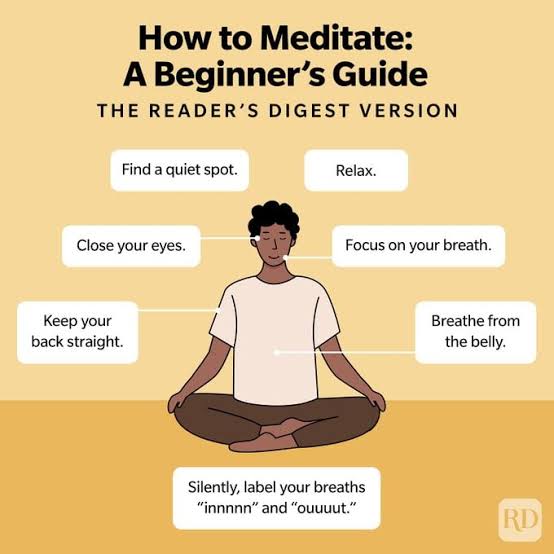
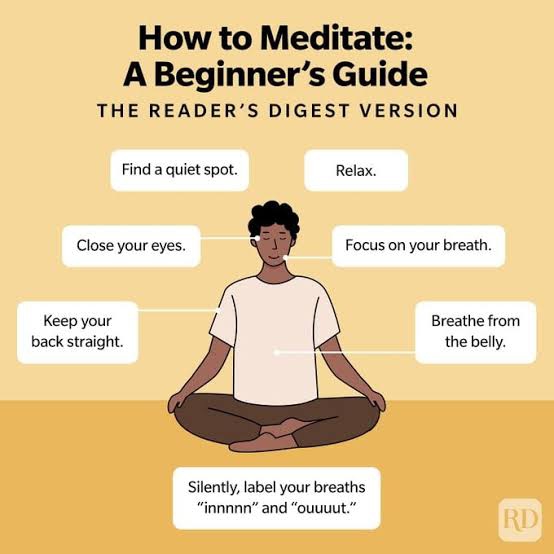
- Find a Quiet Space: Choose a quiet and comfortable place where you won’t be disturbed.
- Set a Time Limit: Especially for beginners, it’s helpful to start with short sessions, like 5-10 minutes.
- Sit Comfortably: You don’t need to sit in a cross-legged position if it’s uncomfortable. Sit with a straight back and relaxed posture.
- Focus on Your Breath or a Mantra: Use your breath or a chosen mantra as your anchor to bring your mind back whenever it wanders.
- Notice When Your Mind Wanders: Inevitably, your attention will stray. When this happens, gently bring it back to your breath or mantra without judgment.
- Close Your Session Gradually: When your time is up, open your eyes slowly and take a moment to become aware of your surroundings before getting up.
How Meditation Works: The Science Behind It
Meditation influences the mind and body in several ways, supported by scientific research:
- Changes in Brain Structure: Regular meditation practice can lead to changes in the brain. Studies using MRI scans have shown that meditation can increase the thickness of the prefrontal cortex, which is responsible for executive functions like decision-making and attention. It also reduces the size of the amygdala, which is involved in the stress response.
- Neuroplasticity: Meditation promotes neuroplasticity, the brain’s ability to reorganize itself by forming new neural connections. This ability allows the brain to adapt to new experiences, learn new things, and recover from injuries.
- Stress Reduction: Meditation activates the parasympathetic nervous system, which is responsible for the ‘rest and digest’ state. This helps in reducing the levels of cortisol, the stress hormone, and promotes a state of relaxation and calm.
- Enhanced Emotional Regulation: By practicing mindfulness, individuals become more aware of their thoughts and emotions without being overwhelmed by them. This enhanced self-awareness can lead to better emotional regulation and reduced reactivity.
- Improved Concentration and Attention: Focused-attention meditation strengthens the ability to concentrate and maintain attention. Research has shown that even short meditation sessions can improve attention span and cognitive performance.
- Better Health Outcomes: Meditation has been linked to a variety of health benefits, including lower blood pressure, improved immune function, and reduced symptoms of anxiety and depression. It also helps in managing chronic pain by altering the perception of pain and reducing the emotional response to it.
Practical Benefits of Meditation
- Reduces Anxiety and Depression: Mindfulness meditation has been found to significantly reduce symptoms of anxiety and depression. By fostering a non-judgmental awareness of thoughts and feelings, individuals can develop a more balanced perspective.
- Enhances Self-Awareness: Meditation encourages self-reflection and a deeper understanding of oneself. This self-awareness can lead to greater personal growth and better decision-making.
- Promotes Emotional Health: Regular meditation practice is associated with positive emotional health. It can increase the production of serotonin, a neurotransmitter that contributes to feelings of well-being and happiness.
- Increases Attention Span: Meditation strengthens the ability to focus and sustain attention over time. This can be particularly beneficial in a world full of distractions.
- Improves Sleep: Meditation can help improve the quality of sleep by promoting relaxation and reducing the impact of stress and anxiety.
- Boosts Immunity: Some studies suggest that meditation can enhance the immune response, potentially leading to a lower incidence of illness and improved overall health.
Conclusion
Meditation is a powerful tool for enhancing mental clarity, emotional stability, and overall well-being. By dedicating a small amount of time each day to meditation, individuals can experience significant benefits that permeate all aspects of life. Whether through focused attention on the breath or mindfulness of the present moment, meditation offers a pathway to greater peace, balance, and health. The true fact about meditation is that its benefits are profound and supported by both ancient wisdom and modern science.
 Astro
Astro 