
Astro De great:
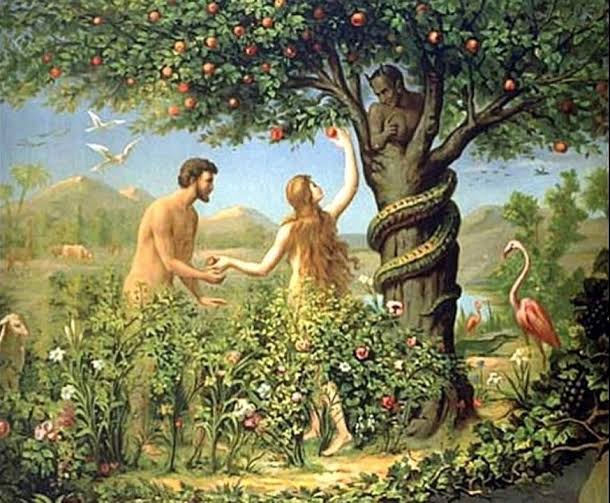
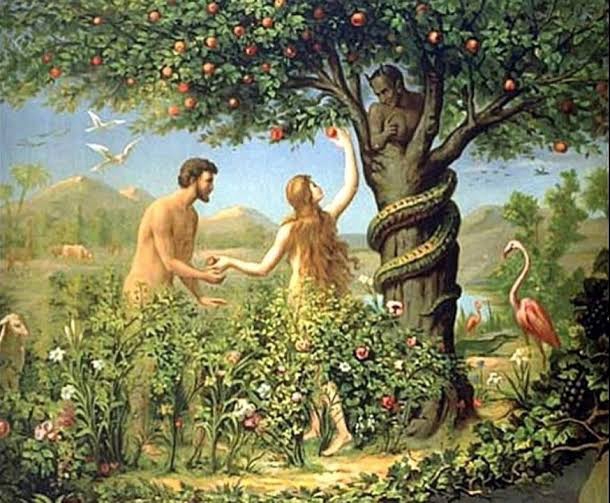
The story of the Garden of Eden, as narrated in the Book of Genesis, is a cornerstone of Judeo-Christian tradition. It depicts the creation of the first humans, Adam and Eve, and their subsequent fall from grace. Central to this narrative are two significant trees: the Tree of Life and the Tree of the Knowledge of Good and Evil.
But what if these trees were not literal, but symbolic? What if they were intended to convey deeper spiritual truths?
In the Book of Genesis, the Garden of Eden is described as a paradise where Adam and Eve lived in harmony with nature and God. The pivotal moment occurs when Eve, and subsequently Adam, eat the forbidden fruit from the Tree of the Knowledge of Good and Evil, leading to their expulsion from the garden.
Some theologians argue that the trees represent deeper moral and spiritual truths rather than physical entities. The Tree of Life is seen as a symbol of eternal life and communion with God, while the Tree of the Knowledge of Good and Evil represents the moral autonomy and the human capacity to choose between right and wrong.
This allegorical understanding is supported by passages such as Proverbs 3:18, where wisdom is referred to as “a tree of life to those who take hold of her.”
Several religious scholars and commentators have interpreted the Garden of Eden narrative allegorically. St. Augustine, a prominent early Christian theologian, suggested that the entire story of Genesis is a series of allegories. He proposed that the forbidden fruit symbolizes the disobedience of God’s command and the desire for moral autonomy.
In Jewish mystical tradition, particularly Kabbalah, the Garden of Eden is also interpreted symbolically. The Zohar, a foundational work in Kabbalistic literature, describes the Tree of Life as the divine source of spiritual nourishment and the Tree of Knowledge as the complex interplay of good and evil in the world.
The symbolic interpretation of biblical narratives is not unique to Judeo-Christian thought. Ancient Greek philosophers often used myths and allegories to convey philosophical ideas. Plato, in his dialogue “Phaedrus,” discusses the concept of the soul’s ascent to truth and knowledge using the allegory of a charioteer guiding two horses.
Similarly, in “The Republic,” Plato’s Allegory of the Cave depicts prisoners in a cave who mistake shadows on the wall for reality, symbolizing the journey from ignorance to enlightenment.
In this context, the Garden of Eden story can be seen as an allegory for the human condition. The expulsion from Eden represents the transition from innocence to experience, from a state of divine communion to one of moral responsibility and the awareness of good and evil.
The narrative of the Garden of Eden, while traditionally understood as a historical account, can be interpreted as a profound allegory conveying deep spiritual and moral truths. Biblical texts, religious commentaries, and ancient Greek philosophy all support the idea that the trees in Eden may symbolize concepts such as eternal life, wisdom, and moral autonomy.
This symbolic understanding enriches our appreciation of the Genesis story, offering timeless insights into the human condition and our relationship with the divine.
In conclusion, the notion that there was no literal tree in the Garden of Eden but rather a symbolic representation aligns with various interpretations from biblical and extra-biblical sources. These perspectives invite us to reflect on the deeper meanings embedded in sacred texts and their relevance to our spiritual and moral lives.
Astro:
Thank you for reading. Join us next time as we continue to explore the rich tapestry of stories and symbols that shape our understanding of the world.
 Astro
Astro 