An Exploration of Perspectives
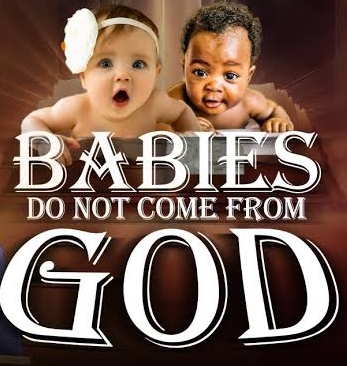
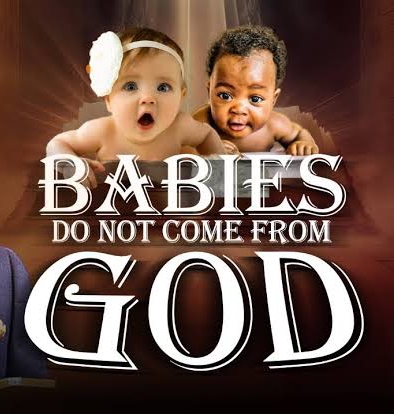
The assertion that “babies do not come from God” is a provocative statement that touches on profound philosophical, theological, scientific, and cultural discussions. To understand the implications of this assertion, it is important to delve into various perspectives, including scientific explanations of reproduction, theological viewpoints, philosophical debates, and cultural beliefs.
Scientific Perspective
From a scientific standpoint, the creation of babies is a biological process grounded in human reproduction. This process involves:
- Reproductive Biology:
- Human reproduction is the result of the fusion of a male’s sperm and a female’s egg during fertilization. This union creates a zygote, which undergoes multiple cell divisions and develops into an embryo.
- The embryo implants itself in the uterine wall, leading to pregnancy and, eventually, the birth of a baby after approximately nine months of gestation.
- Genetics:
- Each parent contributes half of their genetic material to the offspring, resulting in a unique combination of DNA that determines the baby’s physical and some behavioral traits.
- Modern science, through fields such as genetics and embryology, provides detailed insights into how this complex process unfolds, from conception to birth.
Theological Perspective
In contrast to the scientific explanation, many religious traditions ascribe the creation of life, including babies, to divine intervention or the will of a higher power:
- Christianity:
- Christianity often teaches that life is a gift from God. The Bible, in passages such as Psalm 139:13-14, suggests that God is actively involved in the formation of life: “For you created my inmost being; you knit me together in my mother’s womb.”
- Theological interpretations vary, with some viewing God as directly creating each soul, while others see God as setting the natural processes in motion.
- Islam:
- In Islam, it is believed that Allah is the creator of all life. The Quran states in several verses (e.g., Surah Al-Mu’minun 23:12-14) that human beings are created from a drop of fluid and develop under Allah’s guidance.
- Life, including the birth of babies, is viewed as a manifestation of Allah’s will and creative power.
- Other Religions:
- Various other religious traditions have their own interpretations of life’s origin, often involving divine beings or forces. Hinduism, for instance, sees life as part of the cosmic cycle of birth, death, and rebirth (samsara), orchestrated by deities like Brahma, the creator.
Philosophical Perspective
Philosophical debates about the origin of life and the role of divine intervention are longstanding and multifaceted:
- Naturalism vs. Supernaturalism:
- Naturalists argue that all phenomena, including the creation of babies, can be explained by natural causes and laws without invoking supernatural beings.
- Supernaturalists maintain that natural laws are insufficient to explain the origin of life and consciousness, positing that a higher power or divine being is necessary to account for these mysteries.
- Existential and Ethical Considerations:
- Philosophers like Jean-Paul Sartre and Albert Camus, who are associated with existentialism, argue that life has no inherent meaning and that individuals must create their own purpose.
- Ethical discussions also arise about the responsibilities of bringing new life into the world, considering the well-being of future generations and the moral implications of reproduction.
Cultural Perspective
Cultural beliefs and practices around the origin of babies and the role of divine intervention are diverse and deeply ingrained in societal norms:
- Traditional Societies:
- Many traditional societies incorporate spiritual beliefs into their understanding of childbirth. Rituals, prayers, and customs often seek to invoke divine favor or protect the mother and child.
- In some cultures, fertility gods and goddesses play a central role in beliefs about conception and birth.
- Modern Secular Societies:
- In more secular societies, the focus is often on scientific explanations and medical care. However, cultural narratives about the “miracle of life” and the wonder of childbirth persist, even in secular contexts.
- The role of science and technology, such as in vitro fertilization (IVF) and other assisted reproductive technologies, highlights the increasing human control over the reproduction process.
The Intersection of Science and Religion
The debate over whether babies come from God or purely from natural processes often reflects broader discussions about the relationship between science and religion:
- Compatibility and Conflict:
- Some believe that science and religion are compatible, each offering different perspectives on the same reality. They argue that scientific explanations of reproduction do not necessarily negate the possibility of divine involvement.
- Others see science and religion as fundamentally conflicting, with scientific evidence challenging religious claims about the supernatural creation of life.
- Integration of Beliefs:
- Many people integrate scientific understanding with their religious beliefs, seeing natural processes as part of a divine plan. This perspective allows for a harmonious coexistence of scientific knowledge and faith.
- This integrated view is reflected in the work of religious scientists and theologians who seek to reconcile scientific discoveries with theological doctrines.
Implications of the Assertion
The assertion that “babies do not come from God” has significant implications for various aspects of society:
- Educational and Public Discourse:
- How this topic is taught in schools, particularly in science and religion classes, can influence young people’s understanding of life and its origins.
- Public discourse around reproductive rights, bioethics, and healthcare policy can be shaped by beliefs about the origin of life and the role of divine intervention.
- Personal Beliefs and Practices:
- Individuals’ beliefs about where babies come from can affect their personal spirituality, ethical decisions about family planning, and how they approach the experience of parenthood.
- These beliefs can also influence how people cope with challenges related to fertility and childbirth, seeking either medical or spiritual support.
- Interfaith and Secular Dialogues:
- The topic encourages dialogue between different faith traditions, as well as between religious and secular worldviews, fostering greater understanding and respect for diverse perspectives.
- Such dialogues can lead to a more inclusive and empathetic society, where differing beliefs about the origin of life are acknowledged and valued.
Conclusion
The question of whether babies come from God or from purely natural processes is complex and multifaceted, reflecting deep-seated beliefs and values across different domains. By exploring scientific explanations, theological perspectives, philosophical debates, and cultural practices, we gain a richer understanding of this fundamental aspect of human existence. Regardless of one’s stance, the discussion underscores the profound mystery and wonder associated with the creation of life, inviting continual reflection and dialogue.
 Astro
Astro 