

Author: Astro de great
The concept of a leap year has been an intriguing aspect of our calendar system for centuries, introducing an extra day to our regular 365-day year. Let’s delve into the facts surrounding leap years and the reasons behind this calendrical anomaly.
1. The Basics: Why Do We Have Leap Years?
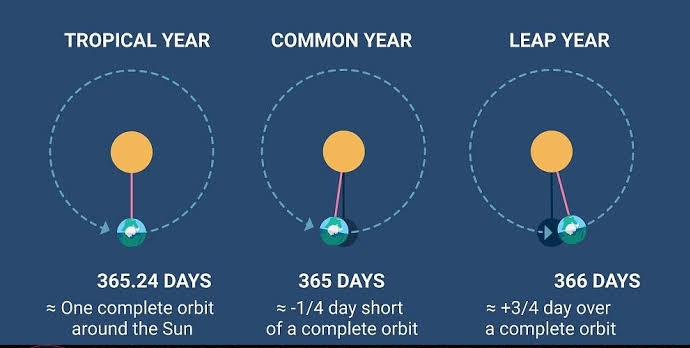
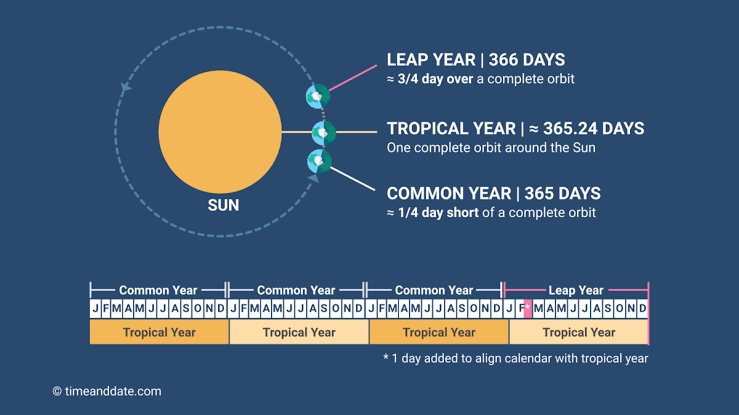
A leap year occurs every four years when an extra day, February 29th, is added to the calendar. This adjustment helps synchronize our calendar year with the astronomical year, which is approximately 365.25 days long. Without this correction, our calendars would gradually fall out of sync with the Earth’s revolutions around the sun.
2. Ancient Roots: The Julian Calendar
The origins of the leap year can be traced back to the Julian calendar instituted by Julius Caesar in 45 BCE. Caesar’s astronomers recognized the need for a corrective measure to align the calendar with the solar year. By adding an extra day every four years, they aimed to maintain better accuracy in tracking the changing seasons.

3. The 365.2422-Day Challenge
The Julian calendar’s approximation of the solar year as 365.25 days, while a significant improvement, still wasn’t perfect. Over time, this small discrepancy accumulated, leading to a misalignment of the calendar with the actual astronomical events.

4. Gregorian Reform: Fine-Tuning the Leap Year Rule
In 1582, Pope Gregory XIII introduced the Gregorian calendar, refining the leap year rule further. The Gregorian calendar maintains the four-year leap year cycle but introduces exceptions to the rule. Years divisible by 100 are not leap years unless they are also divisible by 400. This adjustment ensures a more accurate alignment with the solar year, addressing the slight overcorrection of the Julian calendar.

5. Cosmic Symmetry and Seasons: The Leap Year’s Role
While leap years might seem like a mere numerical adjustment, they play a crucial role in maintaining the harmony between our calendar and the astronomical events that govern seasons. Without leap years, our calendars would drift over time, impacting the synchronization of important events like equinoxes and solstices.
6. Fun Traditions and Quirks
Leap years have also spawned various traditions and superstitions. In some cultures, it’s considered unlucky to marry during a leap year, while others view it as an opportunity for women to propose to men. These traditions add a touch of folklore to the mathematical precision behind the leap year concept.

In conclusion, the leap year stands as a testament to humanity’s quest for precision and accuracy in tracking time. As we continue to navigate the intricate dance between calendars and cosmic events, the leap year remains a fascinating quirk that reminds us of our perpetual quest for understanding and mastery over time.
 Astro
Astro 